
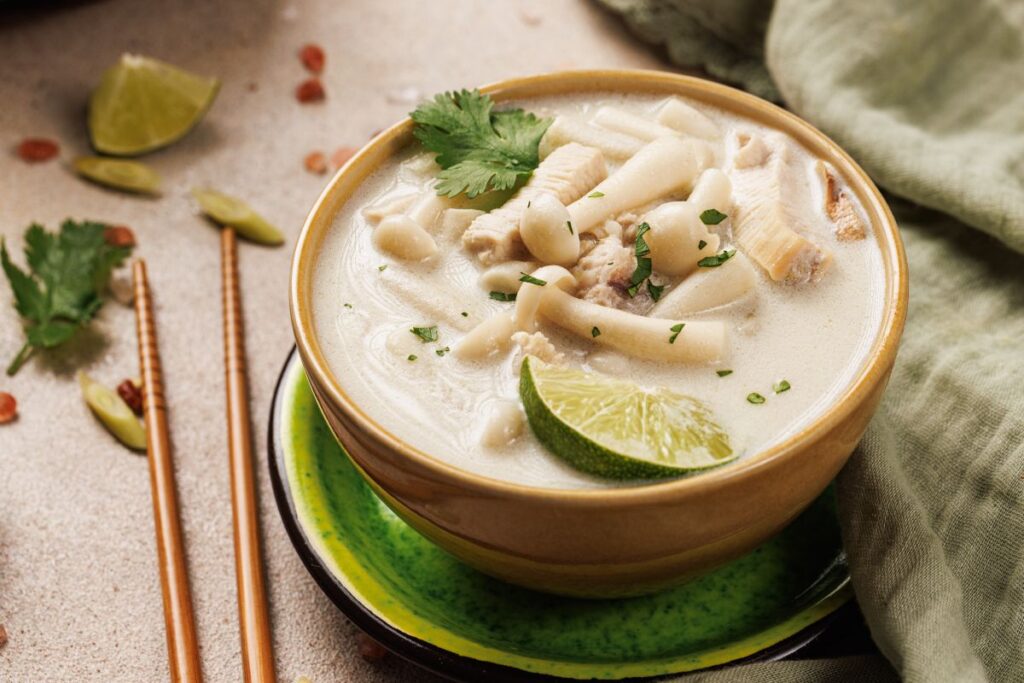
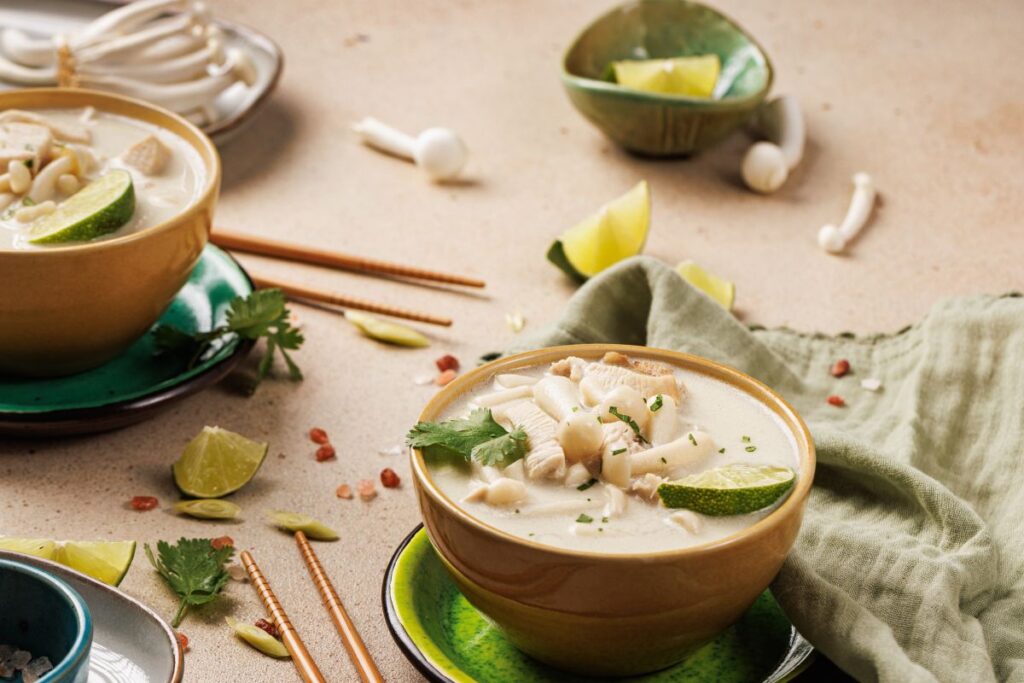
This Thai Coconut Chicken Soup is warm, fragrant, and incredibly soothing, making it a great option when you want a quick meal that still feels special. The creamy coconut base pairs with ginger, lime, and a touch of curry paste to create a bright, aromatic bowl without relying on added sugars. It cooks in under 30 minutes, yet delivers layers of flavor that taste slow-simmered and deeply comforting.
The term “diabetic-friendly” is used throughout this site to describe recipes that are lower in carbs and sugar. It is not intended to provide dietary advice or to indicate that a recipe is appropriate for every individual. Please review each recipe’s ingredients and nutrition information to ensure it aligns with your personal dietary needs and guidance.
What Gives This Soup Its Signature Thai-Inspired Flavor
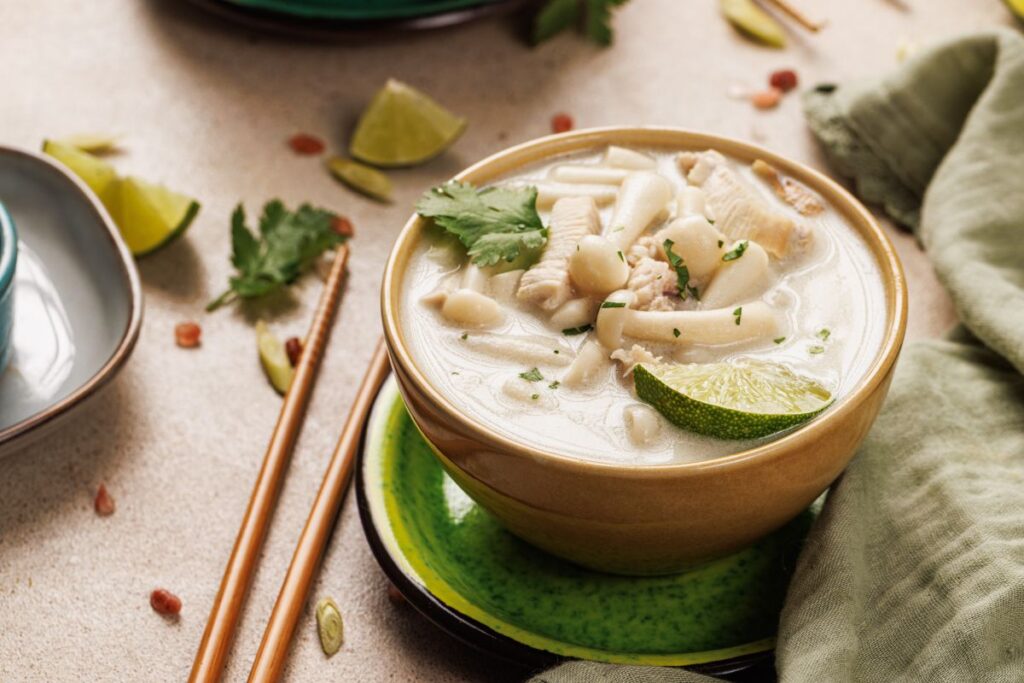
The heart of this soup is the balance of richness and brightness. Coconut milk creates a silky base while the curry paste warms and perfumes the broth. Fresh ginger adds gentle heat, mushrooms bring earthy depth, and lime juice brightens everything at the end. Optional lemongrass adds a soft citrus aroma that rounds out the broth beautifully. Even though the ingredient list is simple, the flavor feels restaurant-quality.
Helpful Tips for Making the Best Thai Coconut Soup
This soup is very forgiving, but a few small techniques make all the difference. Letting the curry paste and ginger simmer briefly in the coconut milk helps them release their full flavor. Cutting the chicken into small, even pieces ensures it cooks quickly without drying out. And adding the lime juice at the end keeps it fresh and vibrant rather than muted by heat. If you want a richer broth, use full-fat coconut milk. For a lighter version, mix in a little more water without losing the flavor balance.
Easy Ingredient Swaps and Variations
You can customize this soup in several ways while keeping it diabetic-friendly.
• Swap chicken breast for chicken thighs if you prefer a more tender bite.
• Use red curry paste instead of green for a slightly deeper flavor.
• Add zucchini, bok choy, or spinach for extra vegetables.
• Include jalapeño slices if you want more heat.
• Add a splash of fish sauce for extra umami.
These variations keep the soup flexible and easy to tailor to your taste.
What to Serve With Thai Coconut Chicken Soup
This soup works well on its own, but you can pair it with low-carb sides for a more filling meal. A simple cucumber salad, loaded broccoli, or a small portion of cauliflower rice all complement the flavors without overpowering the dish. If you’re making this for meal prep, pack the garnishes separately so the herbs stay bright and fresh.
How to Store Leftovers
Store cooled soup in an airtight container in the refrigerator for up to three days. The flavors continue to develop, making it even better the next day. Reheat gently on the stovetop to avoid overcooking the chicken or separating the coconut milk. Freezing is possible, although the texture of the mushrooms may soften more once thawed.
Thai Coconut Chicken Soup
Ingredients
- 1⅔ cups coconut milk
- 10 oz chicken breast diced
- ½ tablespoon green curry paste
- 1- inch piece of fresh ginger thinly sliced
- 1½ cups sliced mushrooms
- 2 tablespoons lime juice
- 1 stalk lemongrass optional
- Salt to taste
- Optional garnish: chopped fresh cilantro or lime wedges
Instructions
- Cut the chicken into small bite-sized pieces and set aside.
- Pour the coconut milk into a medium pot along with ¾ cup water. Add the curry paste and sliced ginger, then warm over medium heat, stirring until the paste blends into the liquid.
- Stir in the chicken and sliced mushrooms. Let the soup simmer for around 10 minutes, or until the chicken is cooked through and the mushrooms are soft.
- Add the lime juice and season the broth with salt. Remove the lemongrass stalk, if using.
- Serve hot and garnish with cilantro or lime wedges if desired.
Nutrition
Nutritional Disclaimer: Please note that the nutritional information in this content is provided as a guideline only and should not replace professional medical advice. Consult with a healthcare professional to ensure that any dietary changes or nutritional guidelines are appropriate for your personal health needs.